M'Goun, the other giant of the High Atlas
Morocco's third summit, M'Goun is crossed rather than climbed: earthen villages, mule passes and wadeable gorges, far from the Toubkal crowds.
Published 7 October 2026, updated 5 November 2026
On this page
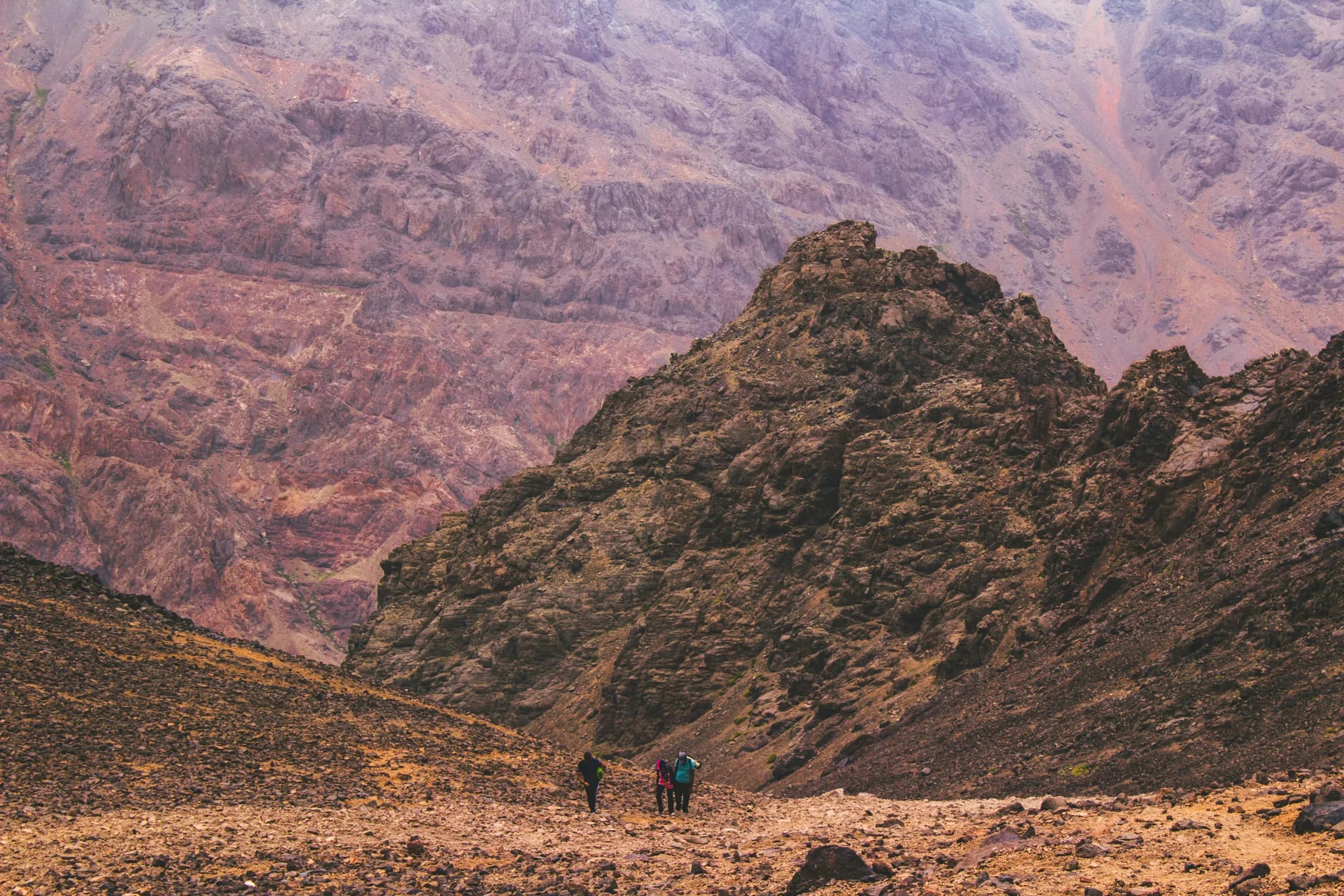
At 4,071 m, Ighil M'Goun is Morocco's third summit. It has neither Toubkal's crowded refuge nor the morning queue on the pass. It has something else: whole days of walking without meeting anyone.
The character of the massif
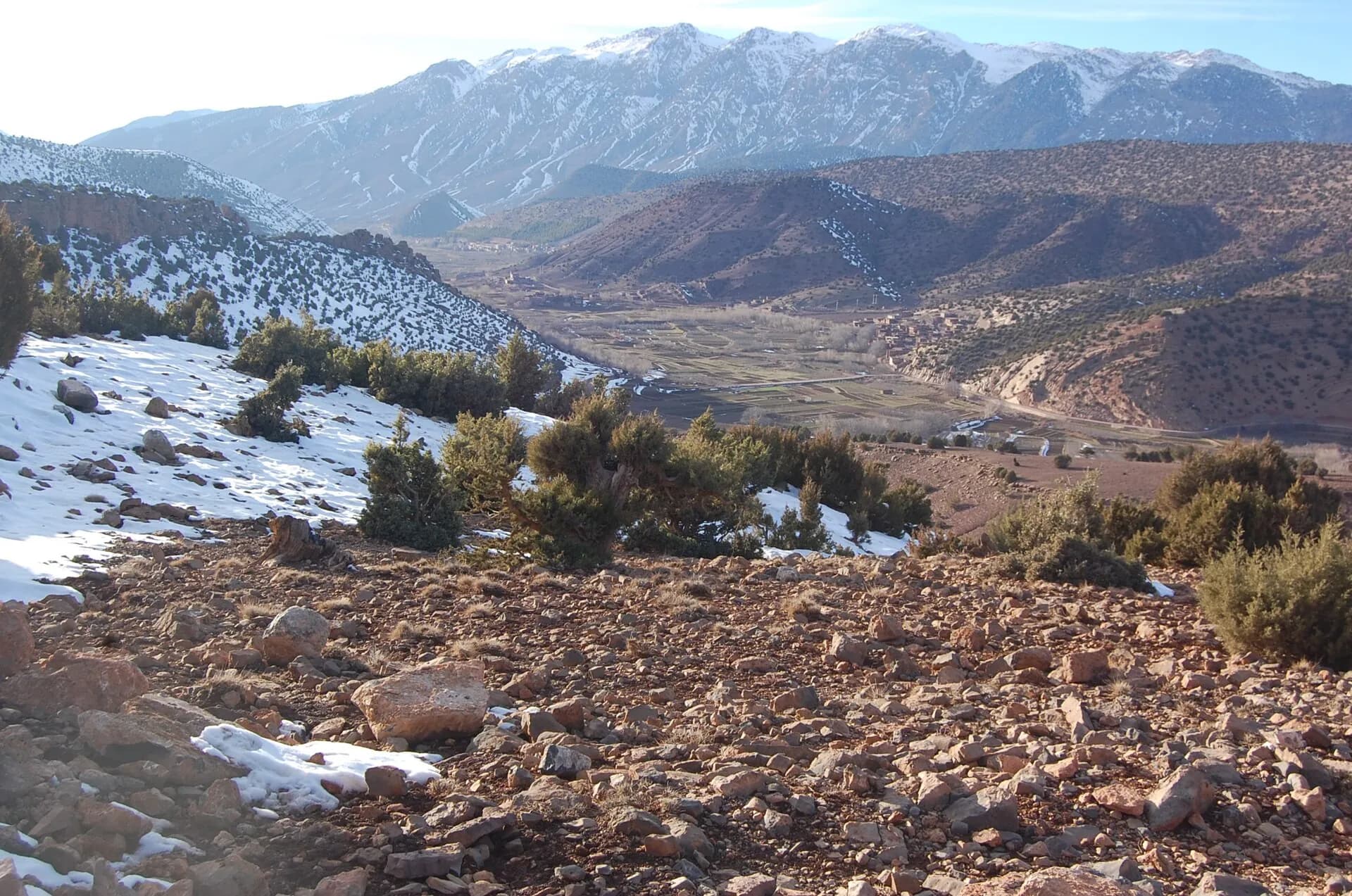
- A vast plateau rather than a pyramid: you reach it by traversing, not by going straight up.
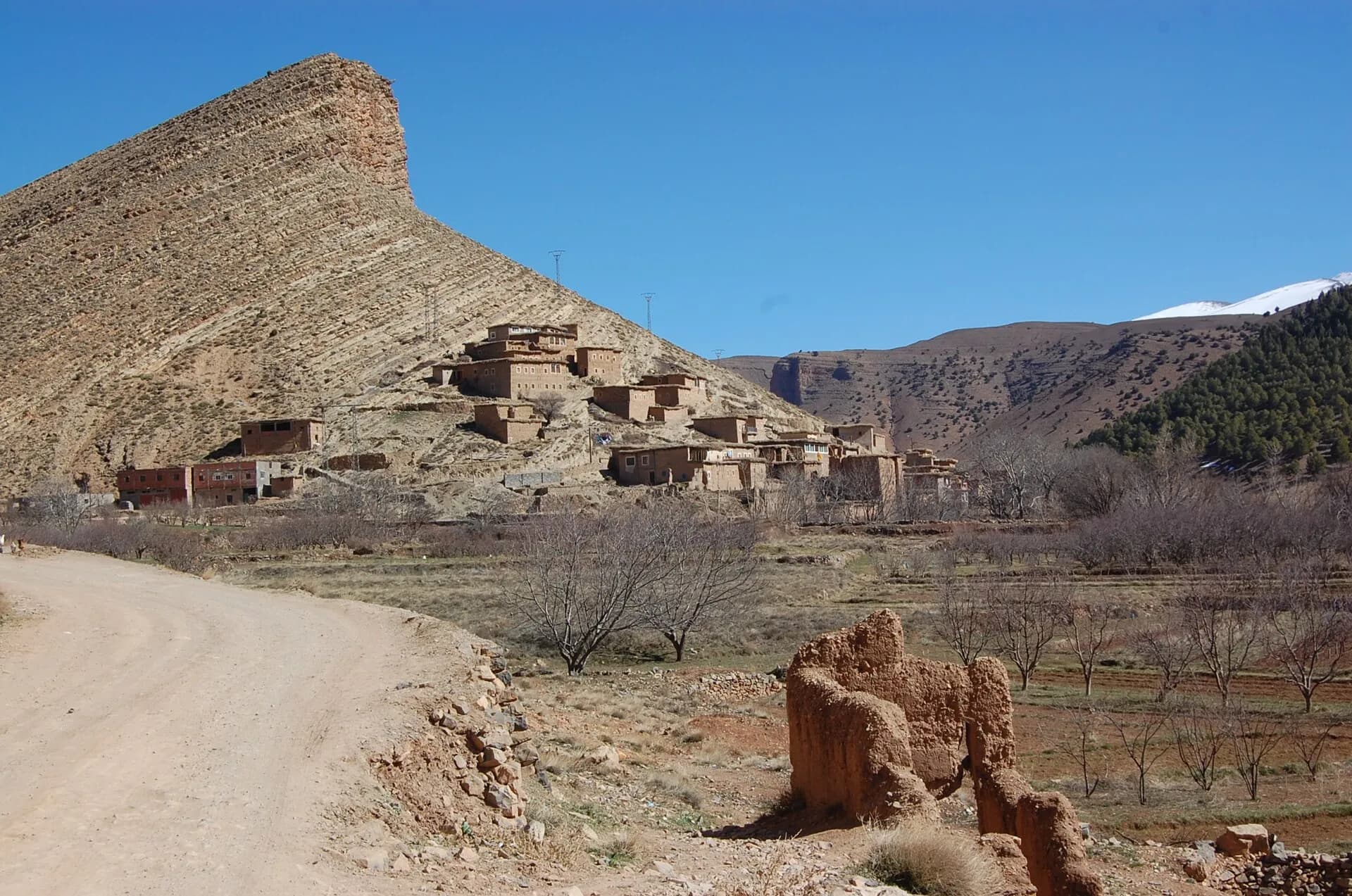
- Earth-built villages lived in year-round — Aït Bouguemez, the "Happy Valley", is the gateway.
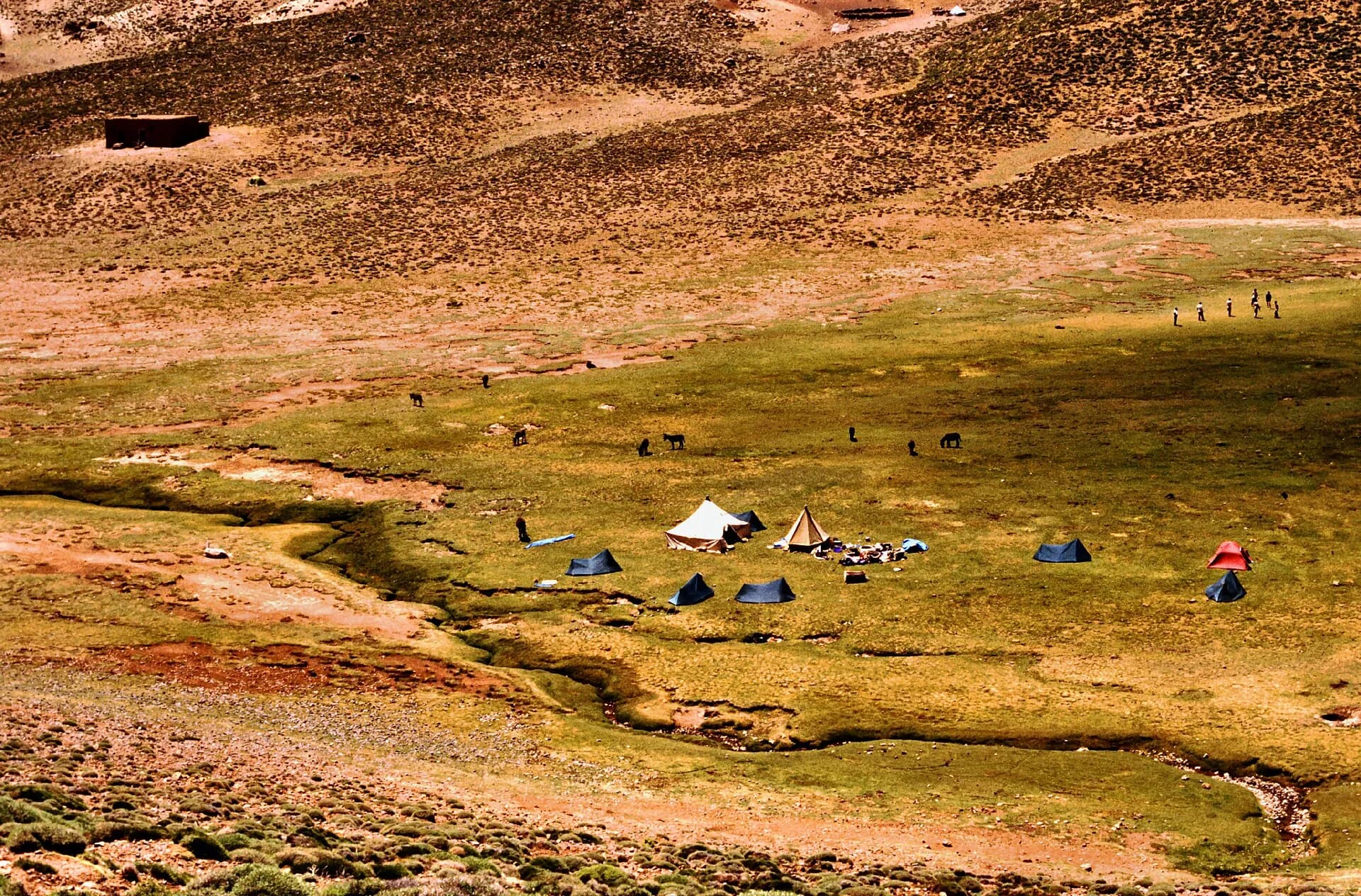
- Bivouacs and village gîtes, rather than one large refuge.
- Classic mule support: your bags travel, you walk light.
Toubkal is climbed. M'Goun is crossed. Not the same journey, and often not the same walker.
The typical traverse
- Days 1–2: up from Aït Bouguemez, passes at 2,900–3,300 m, first bivouacs.
- Day 3: the summit ridge — long and airy, but not technical in summer.
- Days 4–6: down into the gorges — river crossings on foot, wet feet, narrow canyon.
- Allow 6 to 8 days for an honest traverse; fewer if you only want the summit.
The season, plainly
- June to October: the window. Dry trails, clear passes, cold nights at altitude.
- May: beautiful in the valley, but the gorges can run high. Caution applies, and the guide may reroute.
- November to April: snow on the passes, fewer gîtes open. Winter ground.
For which walker?
The one who will take six committed days over one night in a refuge, who prefers villages to ticked summits, and who doesn't need a number to bring home. If your objective fits in one figure — "4,167" — stay on Toubkal.
Compare seasons by massif: when to go. See the routes in the massif: M'Goun treks, and to compare, the Toubkal massif.